From South bank of the mouth of the Singapore River, we passed Elgin Bridge to get to the North Bank. I have mentioned earlier a brief history about Elgin Bridge
 |
| Elgin Bridge with the crest of the Singapore Municipal Commission |
 |
| The crest of the Singapore Municipal Commission |

Elgin Bridge was the first bridge across the Singapore River, a wooden one called Presentment Bridge was constructed at this location in 1823. Its narrowness limited the number of people who could use it and a ferry service existed to facilitate the crossing. By the 1840's the road was constructed and bridge divided it into North Bridge Road and South Bridge Road.
At the turn of the century, more business was done on the south of the bridge and hence South Bridge Road known as PO (big town in Fujian) and North Bridge Road as SIO PO (small town). The bridge underwent reconstruction three times and the present Elgin bridge, named after a former Viceroy of India, was built in 1925.
 |
| view from the Elgin bridge, Singapore River and the Business district at the South bank |
 |
| view from Elgin bridge, North bank of the mouth of Singapore River |
 |
| South Bridge Rd |
 |
| view from the Elgin bridge, Singapore River and the Business district and the Boat Quay Restaurants at the South bank. |
 |
| view from the Elgin bridge, Singapore River and the Boat Quay Restaurants at the South bank |
 |
| Mouth of Singapore River |
 |
| Mouth of Singapore River |
 |
| Elgin Bridge, Singapore |
 |
| across the North Boat Quay, Singapore |
 |
| North boat quay, Singapore |
 |
| view of the South boat quay linked by the Elgin bridge to the North boat quay along the Singapore River |
 |
| Parliament House, Singapore |
 |
| Parliament House, Singapore |
 |
| Parliament House, Singapore |
 |
| CBD and the Boat Quay Restaurants along the mouth of Singapore River |
 |
| North Boat Quay, Singapore |
 |
| Parliament House, Singapore |
 |
| Mouth of Singapore River |
 |
| white statue of Sir Stamford Raffles at the north bank of Singapore River. |
In the early 19th century, the British and the Dutch competed to control the highly profitable sea trade routes.
The Dutch had control of the trade in the Malay Archipelago due to their ports in the strategic locations.
To break the Dutch monopoly, the Governor of Bencoolen in Sumatra, Sir Raffles Stamford, searched for a more strategically located trading centre.
On 29 January 1819, while Sir Raffles was sailing to St John's island with William Farquhar, he spotted a narrow strip of beach in the south of Singapore (mouth of Singapore River). When he learnt from the Orang Lauts or sea people that there was no presence of Dutch, the went back the next day to set up the trading settlement in Singapore.
The British found Singapore a suitable trading place:
1. Strategically located in the heart of Malay Archipelago
2. No presence of Dutch
3. Natural Harbour
4. Sufficient supply of drinking water and
5. Safe from stormy weather
***Reference: Sec 1 HistoryTextbook
 |
| Plaque at the landing site of Sir Raffles Stamford in Singapore in 1819 |
 |
| white statue of Sir Stamford Raffles at North Boat Quay, Singapore |
 |
Boat Quay, 1950's.
National Museum of Singapore Collection, Courtesy of National Heritage Board
|
Sir Stamford Raffles reserved the North bank of the Singapore River for government buildings, while the south bank was designated for warehouses and other commercial developments.
In the early 1820's, Sir Raffles launched Singapore's first land reclamation project, turning the river's swampy south bank into an embankment on which shophouses and godowns could be built. It became known as Boat Quay.
Traditional cargo boats called tongkang or twakok ferried goods to and from quayside warehouses until the 1980's, when the Singapore River was thoroughly cleaned up.
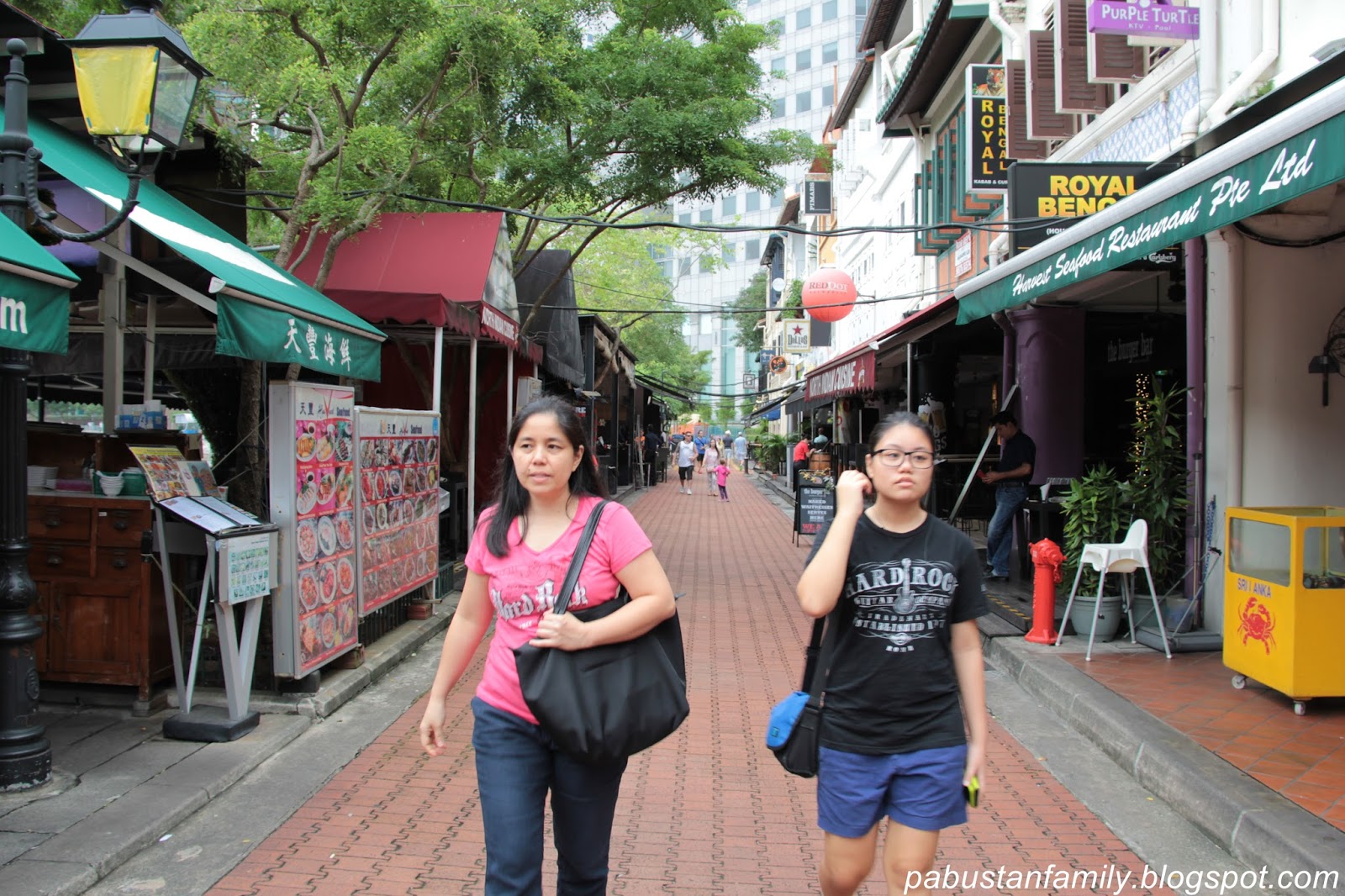
In the 1990's, Boat Quay's traditional shophouses were restored as modern shops and riverside eateries.
 |
| The Arts House (formerly the Old Parliament House), Singapore |
The building of The Arts House was formerly the Old Parliament House, Singapore. Latter needed larger chamber and better facilities for educational programmes, moved to the adjacent building.
This building housed the Parliament from 1965 to 1999. Built in 1827, it is the oldest government building in Singapore
 |
| view of the Anderson bridge and the Marina Bay Sands Sky Park |
 |
| black statue of Sir Stamford Raffles in front of the Clock Tower, Singapore |
Victoria Theatre and Victoria Memorial Hall are two buildings joined by a clock tower with a common corridor. It serves as the performing arts center in the civic district of Singapore.
Victoria Theatre was known as the Town Hall in 1862. Originally, it was a theatre on the ground floor and government offices on the second floor. It housed also the Singapore Library till 1876. In 1893, the government offices moved out to a larger place.
In memory of the death of Queen Victoria in 1901, Victoria Memorial Hall was built in the same year.
After the completion of the Memorial Hall, the Town Hall was renovated following the architectural design of the Memorial Hall and was renamed to Victoria theatre
In 1906, the clock tower was built connecting the Town Hall (Victoria Theatre) and the Victoria Memorial Hall. The tower was built on an axial line with the Anderson bridge nearby.
The memorial hall was used as a hospital for victims of bombing raids by the Japanese forces during the World War II, before the colony
 |
| view of the Anderson bridge and the Marina Bay Sands Sky Park |
 |
| black statue of Sir Stamford Raffles in front of the Clock Tower, Singapore |
 |
| Memorial tablet for Sir Stamford Raffles, the founding of Singapore |
A statue of Stamford Raffle by T. Wooher was moved from the Padang to the front of the Memorial Hall on 6 February 1919 to commemorate the 100th year founding of Singapore. The statue is with a semicircular colonnade and a pool.
 |
| Victoria Theatre and the Victoria Memorial Hall joined by the Clock tower at the North bank of the Singapore River
***Ref: NHB, Wikipedia
|
 |
| View from the Cavenagh bridge is the Anderson Bridge spans across the mouth of Singapore River |
Next post about the historical Fullerton building, Marina Bay and Merlion Park
See also:
South bank and the boat quay restaurants
Mouth of Singapore River
Other Places of Interest in Singapore