Sunday, 17 January 2016

Boat Quay Restaurants and Bars, South Bank of the Singapore River 01 January 2016

Other Places of Interest in Singapore

On the very first day of 2016, we decided to spend half of the day walking around the Singapore River and Marina Bay.  We took the MRT and alight at Raffles Place Station exit H to Chulia Street/Six Battery Road.


On this post, we will show you around Boat Quay and the Restaurants along the South bank of the mouth of Singapore River.


Between 1860 and the 1970, Boat Quay was the busiest part of the Port of Singapore. Many godowns  (warehouses) were built along the river.  And as the south of the river resembles the belly of the fish, as per chinese belief it is where prosperity lay, many shophouses were also built.  The higher the shophouse, the wealthier the owner.

In 1977, a major clean-up of the Singapore River had been called by the then Prime Minister Lee Kuan Yuew.  The clean up lasted for 10 years.  The port was relocated and taken over by the other terminals:  Pasir Panjang, Brani, Keppel Harbour, Tanjong Pagar and the Jurong Port.

Since 1990, the then godowns and shophouses located at boat quay were converted to Restaurants, bars and cafes.


Singapore River.  Photo taken from the North Boat Quay with the view on the left: the Elgin Bridge, South Boat Quay Restaurants and the Business District at the South Bank.


Aerial view of the Singapore River in the 1960's with the Fullerton Hotel, Anderson Bridge, Cavenagh, Bridge, Business District at the South Bank, Boat Quay and the then Port of Singapore, Elgin Bridge at the far end.
Photo taken at the Fullerton Heritage Gallery, inside the Fullerton Hotel., courtesy of the National Archives of Singapore.

Today, South Boat Quay along the mouth of Singapore River.

going upstream passes the Elgin Bridge


Elgin Bridge is a vehicular bridge across the Singapore River.  The Existing bridge was completed in 1929 and named after Lord Elgin, Governor-General of India from 1862 to 1863.


going downstream is the Cavenagh Bridge


Cavenagh bridge is one of the oldest bridges in Singapore opened in 1870.  It is the only suspension bridge in Singapore.  Rickshaws and ox carts had been carried by the bridge in the earlier years.  When the bridge was unable to cope up with the traffic flow, Anderson Bridge was built in 1910.
The government had decided not to demolish the Cavenagh bridge.  It is now a pedestrian bridge.


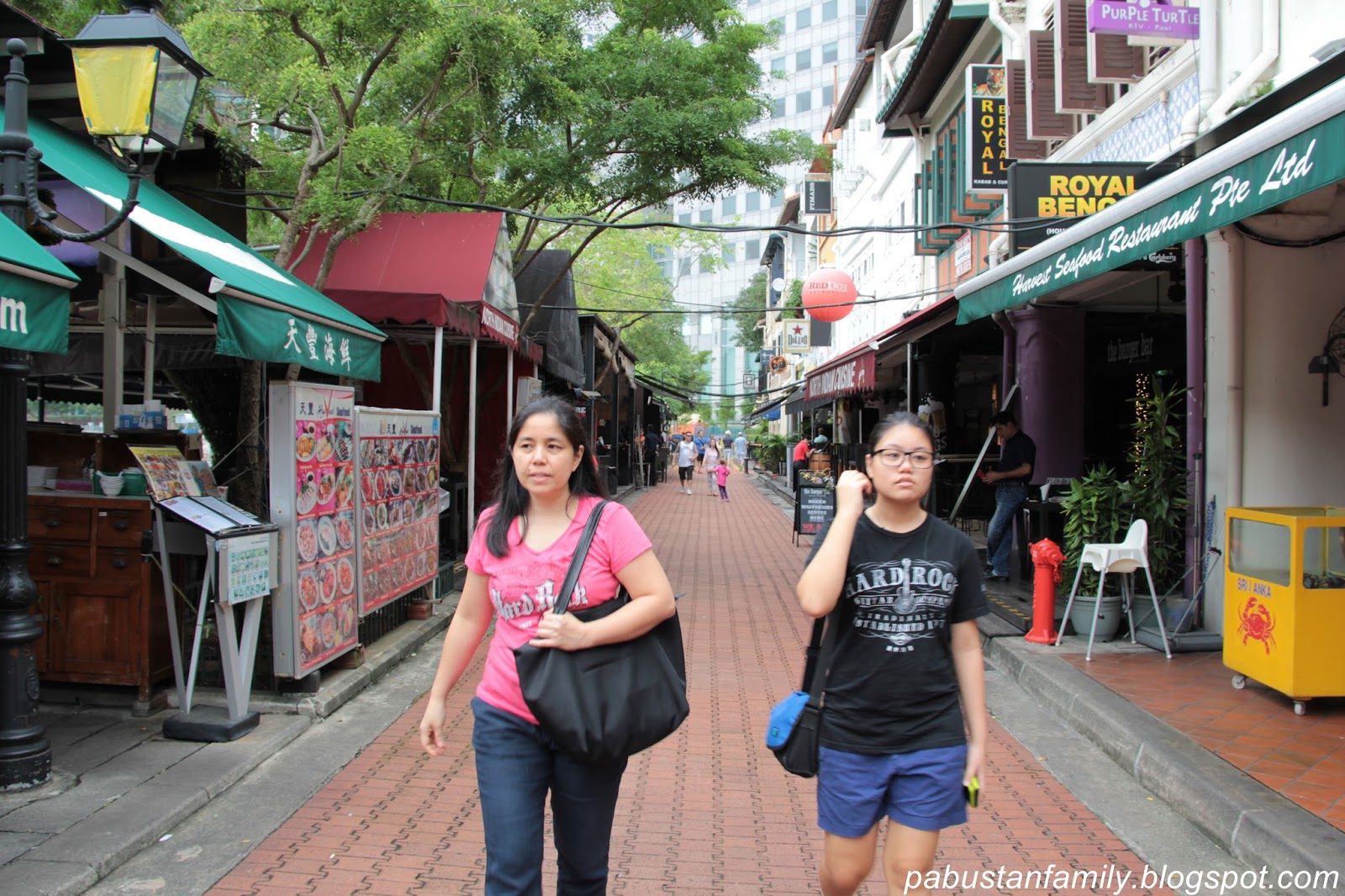
South bank of the river on the way to the Boat Quay Restaurants, Cafes and Bars


Since 1990, the Boat Quay at the South bank has been transformed into pedestrian and restaurants


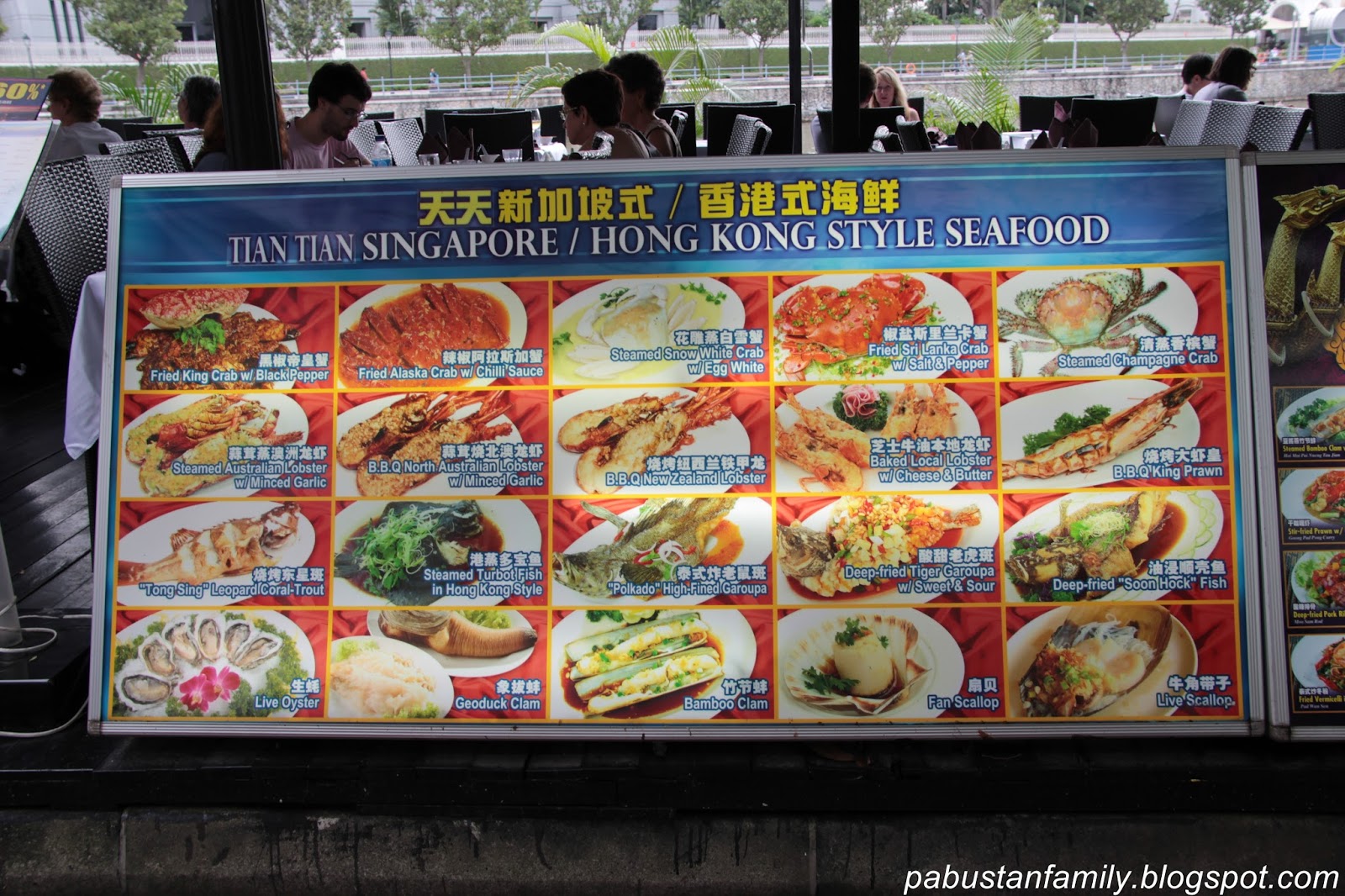
Boat Quay at the South Bank of the Singapore River is busier at night and most visited by the professionals and expatriates due to its proximity to office towers.  The two to three story shophouses built in the 1860's had been converted to restaurants, bars and cafes.    It offers a variety of cuisines from Western to Asia and European as well with the views of the Singapore River.  It is also a great place for the  tourists to sit and relax after a long day of sightseeing.  Indulge with the ambiance as recharging for the next day work/sightseeing.


Elgin Bridge

An unnamed footbridge believed to have been existed in 1819, the year Sir Thomas Stamford Raffles, the founder of Singapore,  landed on Singapore.
In 1822, the unnamed footbridge was replaced by a wooden drawbridge named Presentment Bridge.
In 1843, a wooden footbridge was built to replace the existing drawbridge.
In 1862, an iron bridge was built, replacing the wooden footbridge, and named after the James Bruce, 8th Earl of Elgin, Governor General of India from March 1862 to November 1863.  The bridge was named, Elgin Bridge.


The south of the river is like the belly of  a fish, as per chinese belief, it is where  prosperity and luck lay.  Many shophouses were built in the earlier years, which crowded the area.  At present, more financial and business buildings were built within the southern area.


See also:


Saturday, 26 December 2015

Chili's at Resorts World Sentosa, Singapore 25 December 2015

Table of Contents

We  spent Christmas 2015 at Universal Studios Singapore.  Before we went inside, we had a late lunch at Chili's located at Resort World Sentosa, Island of Sentosa, Singapore.

Chili's is a grill and bar restaurant features texan and mexican cuisine.  You would never miss it, along the way to the theme parks.


We managed to take photo of some of the menus.  Should you visit Singapore, you could check from below if within your gastronomical preference.


One of  our orders was Mix & Match Fajitas and chose Grilled Chicken and Shrimps.  We were given though Grilled steak instead. We did not highlight anymore to the waiter.  The Fajita as a whole was really so great, a bit pricey though.  The meat was tender.


We also tried the NY Strip steak.  It was... steak... taste like a steak.  We regret though we could have tried their quesadillas or enchilladas.  Anyway, on our next vist... (?)   Next Christmas :)


These were what we had


Fajita with two main mix:  grilled steak and shrimps


NY strip steak with broccoli and garlic bread.  It was a 10z strip steak with their own special seasonings and topped with seasoned butter.  It was supposed to be served with New skillet mashed potatoes, I was served the garlic bread instead.  Did not want to argue with the waiter,  it was Christmas.

The Fajita was served with warm flour tortillas & fresh new toppings:  mixed chees, fresh gucamole, pickled onion & jalapeno relish, cumin-lime sour cream, house-made pico de gallo & fresh salsa.


Other Places of Interest in Singapore

Wednesday, 23 December 2015

Mouth of the Singapore River

Table of Contents

The  mouth of the Singapore River, going upstream,  starts from the esplanade area to the three Quays along the  river:  Boat quay, clarke quay, roberson quay.  The mouth empties at Marina Bay.  The bay is accross the esplanade bridge, the other side of the The Big Durian

Mouth of Singpaore River with the veiw of the Esplanade Theatres on the bay
On the left is the Esplanade Theatres  on the Bay  (often refer as The Big Durian)  and the Esplanade Bridge

The Big Durian on the reclaimed land in  the Marina bay area


Esplanade Theatres on the bay

Mouth of Singpaore River with the veiw of the Esplanade Theatres on the bay


Anderson Bridge, Singapore

going upstream, passing under the Anderson Bridge


Anderson Bridge

Anderson Bridge connects the Finance District (South)  to City Hall (North).  It is a vehicular bridge spans across the Singapore River.

During the Japanese Occupation (1942~1945), the heads of the criminals were hung on the bridge to remind the citizens not to break the law.


Anderson Bridge

Anderson Bridge


Cavenagh bridge, Singapore

Cavenagh bridge towards the boat quay


Cavenagh bridge

Cavenagh bridge is one of the oldest bridges in Singapore opened in 1870.  It is the only suspension bridge in Singapore.  Rickshaws and ox carts had been carried by the bridge in the earlier years.  When the bridge was unable to cope up with the traffic flow, Anderson Bridge was built in 1910.
The government had decided not to demolish the Cavenagh bridge.  It is now a pedestrian bridge.


The First Generation near the Cavenagh bridge, Singapore

The sculptures depict the Singapore kids in the first generation.  Apparently, Singapore was not as progressive as today, yet the happiness, joy and contentment could be visualized from the subject. Playfully and without fear jumping off  to the around 7m depth river

The First Generation near the Cavenagh bridge
The sculptures are called "The First Generation" located near the Cavenagh bridge and created by Chong Fah Cheong.


Cavenagh bridge

Cavenagh Bridge


1.  The mouth of Singapore River was the old Port of Singapore located at the Southern part of the Island.  

2.  Early inhabitants were the Orang Lauts or "Sea Gypsies"  and Malays.

3.  Temenggong Abdul Rahman settled near the river mouth.  Former was the Sultan of Singapore before Sir Stamford Raffles discovered the city.

4.  Sir Stamford Raffles arrived at the North Bank of the Singapore River.

5.  In June 1819, a huge rock was discovered with ancient inscriptions that no one had ever translated. The rock believed to date back in the 13th centuries or earlier.  The rock had been blown in 1843 to clear further and widen the passageway to the river and to make space for a Fort and the quarters of its commanders.  The remains from the blast is displayed in the Singapore History Gallery at the National Museum of Singapore and was named "Singapore Stone".  Latter is at present one of the 12 artifact collections.

6.  As per History text book,  Singapore was called Temasek  before the 13th century.  Temasek means sea port or sea town.  The ancient fishing village was at the Singapore River Mouth

7.  Singapore Myth: In the 13th century, Sang Nila Utama from Palembang in Sumatra was then looking for a new settlement outside of his country of origin that he could call a city.  He spotted an island and learnt that is was called Temasek.  While he was hunting in Temasek, he thought he saw a peculiar animal which was very fast, immediately disappeared into the jungle.  His chief minister told him it could probably be a lion.  He then named his new city, Singapura,  Singa means lion and pura means city.

8. Singapore River was a busy port during the 14th century.  the business declined from 14th century until the arrival of Sir Stamford Raffles in 1819.  

9. From 1820, the mouth had been the centre of trade, finance and commerce.  Buildings and bridges were built.

10. After 1825, the area became a convict centre.  It was a gaol (jail) for Indian convicted in British India.  The convicts were transported to Singapore to serve out their sentences and assist with the labour shortage.  Singapore, the newly acquired settlement in that period, was the fastest growing among others.  These convicts helped built the early public roads, monumental buildings and bridges. They actually built the early Singapore.

11.  From 1880, Singapore River became crowded due to increasing immigrants living along the river. As trade expanded, it became polluted with the pig wastes from farm, oil spills from boats, industrial waste products, disposal of garbage  from hawkers and settlers and sewage.

In 1977, the then Prime Minister of Singapore, Mr. Lee Kuan Yew, called for the clean up project of the Singapore River and the Kallang Basin. The clean up took 10 years and it cost S$170million. Part of the clean up was the relocation of the 4,000 squatters  to public housing and hawkers were persuaded to transfer to the hawker centres..  The port had been re located to Keppel Harbour and Harbourfrontt and later took over by the other terminals.  Foul smell from the river had been dredged and the thrown rubbish had been cleared.  

The Government had introduced the Clean Rivers Education Programme in 1987.  The programme goal was to raise awareness of the negative effects of dumping waste and to encourage people to make the waterways clean.

The Mouth of the Singapore River at present
PREVIOUSLY THE  PORT OF SINGAPORE 


Fullerton hotel

Boat Quay

Singapore River
 On the left is the Boat quay at the South bank of the Singapore River.  Previously the Port of Singapore


Boat Quay Restaurants

Many immigrants worked and lived around Singapore back then.  Chinese squatted at the South Bank of the river.  Malays and Indians at the Kampong upstream and later moved to Kallang.


Singapore River

The south of the river is like the belly of  a fish, as per chinese belief, it is where  prosperity and luck lay.  Many shophouses were built which crowded the area.  At present, more financial and business buildings were built within the southern area.

Boat Quay
UOB plaza.


The original mouth emptied at Singapore straits.  After the major land reclamation, Singapore river empties into Marina bay and is now part of the Marina Reservoir to create fresh water.

The mouth of Singapore River today has shifted from that of trade and port to more of tourism and sort of beautifying the commercial zones of Singapore.

You may want to see also Boat Quay and the North bank of Singapore River.

Other Places of Interest in Singapore

.